지젝에 관한 러시아어 자료들을 뒤적이다가 발견한 건 '레닌은 오늘날 우리에게 자유에 대해서 말해줄 수 있는가(Can Lenin tell us about freedom today?)'란 텍스트의 (러시아어)번역이다. 원텍스트는 온라인 저널인 'The Synptom' (Issue 1, Autumn 2001)에 실려있는 것인데, 기본적인 아이디어는 <혁명의 다가온다>의 독어본/러시아어본/국역본이나 영어본과 공유하지만 이들 텍스트들과 정확하게 일치하는 건 또 아니다. 참고자료로 옮겨놓는 이유이다.

CAN LENIN TELL US ABOUT FREEDOM TODAY?

Slavoj Zizek

Today, even the self-proclaimed post-Marxist radicals endorse the gap between ethics and politics, relegating politics to the domain of doxa, of pragmatic considerations and compromises which always and by definition fall short of the unconditional ethical demand. The notion of a politics which would not have been a series of mere pragmatic interventions, but the politics of Truth, is dismissed as "totalitarian." The breaking out of this deadlock, the reassertion of a politics of Truth today, should take the form of a return to Lenin. Why Lenin, why not simply Marx? Is the proper return not the return to origins proper? Today, "returning to Marx" is already a minor academic fashion. Which Marx do we get in these returns? On the one hand, the Cultural Studies Marx, the Marx of the postmodern sophists, of the Messianic promise; on the other hand, the Marx who foretold the dynamic of today's globalization and is as such evoked even on Wall Street. What these both Marxes have in common is the denial of politics proper; the reference to Lenin enables us to avoid these two pitfalls.

There are two features which distinguish his intervention. First, one cannot emphasize enough the fact of Lenin's externality with regard to Marx: he was not a member of Marx's "inner circle" of the initiated, he never met either Marx or Engels; moreover, he came from a land at the Eastern borders of "European civilization." (This externality is part of the standard Western racist argument against Lenin: he introduced into Marxism the Russian-Asiatic "despotic principle"; in one remove further, Russians themselves disown him, pointing towards his Tatar origins.) It is only possible to retrieve the theory's original impulse from this external position, in exactly the same way St Paul, who formulated the basic tenets of Christianity, was not part of Christ's inner circle, and Lacan accomplished his "return to Freud" using as a leverage a totally distinct theoretical tradition. (Freud was aware of this necessity, which is why he put his trust in Jung as a non-Jew, an outsider - to break out of the Jewish initiatic community. His choice was bad, because Jungian theory functioned in itself as initiatic Wisdom; it was Lacan who succeeded where Jung failed.) So, in the same way St Paul and Lacan reinscribe the original teaching into a different context (St Paul reinterprets Christ's crucifixion as his triumph; Lacan reads Freud through the mirror-stage Saussure), Lenin violently displaces Marx, tears his theory out of its original context, planting it in another historical moment, and thus effectively universalizes it.

Second, it is only through such a violent displacement that the "original" theory can be put to work, fulfilling its potential of political intervention. It is significant that the work in which Lenin's unique voice was for the first time clearly heard is What Is To Be Done? - the text which exhibits Lenin's unconditional will to intervene into the situation, not in the pragmatic sense of "adjusting the theory to the realistic claims through necessary compromises," but, on the contrary, in the sense of dispelling all opportunistic compromises, of adopting the unequivocal radical position from which it is only possible to intervene in such a way that our intervention changes the coordinates of the situation. The contrast is here clear with regard to today's Third Way "postpolitics," which emphasizes the need to leave behind old ideological divisions and to confront new issues, armed with the necessary expert knowledge and free deliberation that takes into account concrete people's needs and demands.

As such, Lenin's politics is the true counterpoint not only to the Third Way pragmatic opportunism, but also to the marginalist Leftist attitude of what Lacan called le narcissisme de la chose perdue. What a true Leninist and a political conservative have in common is the fact that they reject what one could call liberal Leftist "irresponsibility" (advocating grand projects of solidarity, freedom, etc., yet ducking out when one has to pay the price for it in the guise of concrete and often "cruel" political measures): like an authentic conservative, a true Leninist is now afraid to pass to the act, to assume all the consequences, unpleasant as they may be, of realizing his political project. Rudyard Kipling (whom Brecht admired) despised British liberals who advocated freedom and justice, while silently counting on the Conservatives to do the necessary dirty work for them; the same can be said for the liberal Leftist's (or "democratic Socialist's") relationship towards Leninist Communists: liberal Leftists reject the Social Democratic "compromise," they want a true revolution, yet they shirk the actual price to be paid for it and thus prefer to adopt the attitude of a Beautiful Soul and to keep their hands clean. In contrast to this false radical Leftist's position (who want true democracy for the people, but without the secret police to fight counterrevolution, without their academic privileges being threatened), a Leninist, like a Conservative, is authentic in the sense of fully assuming the consequences of his choice, i.e. of being fully aware of what it actually means to take power and to exert it.

The return to Lenin is the endeavor to retrieve the unique moment when a thought already transposes itself into a collective organization, but does not yet fix itself into an Institution (the established Church, the IPA, the Stalinist Party-State). It aims neither at nostalgically reenacting the "good old revolutionary times," nor at the opportunistic-pragmatic adjustment of the old program to "new conditions," but at repeating, in the present world-wide conditions, the Leninist gesture of initiating a political project that would undermine the totality of the global liberal-capitalist world order, and, furthermore, a project that would unabashedly assert itself as acting on behalf of truth, as intervening in the present global situation from the standpoint of its repressed truth. What Christianity did with regard to the Roman Empire, this global "multiculturalist" polity, we should do with regard to today's Empire.1 How, then, do things stand with freedom? In a polemic against the Menshevik's critics of the Bolshevik power in 1920, Lenin answered the claim of one of the critics - "So, gentlemen Bolsheviks, since, before the Revolution and your seizure of power, you pleaded for democracy and freedom, be so kind as to permit us now to publish a critique of your measures!" - with the acerbic: "Of course, gentlemen, you have all the freedom to publish this critique - but, then, gentlemen, be so kind as to allow us to line you up the wall and shoot you!" This Leninist freedom of choice - not "Life or money!" but "Life or critique!" -, combined with Lenin's dismissive attitude towards the "liberal" notion of freedom, accounts for his bad reputation among liberals. Their case largely rests upon their rejection of the standard Marxist-Leninist opposition of "formal" and "actual" freedom: as even Leftist liberals like Claude Lefort emphasize again and again, freedom is in its very notion "formal," so that "actual freedom" equals the lack of freedom. 2 That is to say, with regard to freedom, Lenin is best remembered for his famous retort "Freedom - yes, but for WHOM? To do WHAT?" - for him, in the above-quoted case of the Mensheviks, their "freedom" to criticize the Bolshevik government effectively amounted to "freedom" to undermine the workers' and peasants' government on behalf of the counterrevolution... Is today, after the terrifying experience of the Really Existing Socialism, not more than obvious in what the fault of this reasoning resides? First, it reduces a historical constellation to a closed, fully contextualized, situation in which the "objective" consequences of one's acts are fully determined ("independently of your intentions, what you are doing now objectively serves..."); secondly, the position of enunciation of such statements usurp the right to decide what yours acts "objectively mean," so that their apparent "objectivism" (the focus on "objective meaning") is the form of appearance of its opposite, the thorough subjectivism: I decide what your acts objectively mean, since I define the context of a situation (say, if I conceive of my power as the immediate equivalent/expression of the power of the working class, than everyone who opposes me is "objectively" an enemy of the working class). Against this full contextualization, one should emphasize that freedom is "actual" precisely and only as the capacity to "transcend" the coordinates of a given situation, to "posit the presuppositions" of one's activity (as Hegel would have put it), i.e. to redefine the very situation within which one is active. Furthermore, as many a critic pointed out, the very term "Really Existing Socialism," although it was coined in order to assert Socialism's success, is in itself a proof of Socialism's utter failure, i.e. of the failure of the attempt to legitimize Socialist regimes - the term "Really Existing Socialism" popped up at the historical moment when the only legitimizing reason for Socialism was a mere fact that it exists...

Is this, however, the whole story? How does freedom effectively function in liberal democracies themselves? Although Clinton's presidency epitomizes the Third Way of the today's (ex-)Left succumbing to the Rightist ideological blackmail, his healthcare reform program would nonetheless amount to a kind of act, at least in today's conditions, since it would have been based on the rejection of the hegemonic notions of the need to curtail Big State expenditure and administration - in a way, it would "do the impossible." No wonder, than, that it failed: its failure - perhaps the only significant, although negative, event of Clinton's presidency - bears witness to the material force of the ideological notion of "free choice." That is to say, although the large majority of the so-called "ordinary people" were not properly acquainted with the reform program, the medical lobby (twice as strong as the infamous defense lobby!) succeeded in imposing on the public the fundamental idea that, with the universal healthcare, the free choice (in matters concerning medicine) will be somehow threatened - against this purely fictional reference to "free choice", all enumeration of "hard facts" (in Canada, healthcare is less expensive and more effective, with no less free choice, etc.) proved ineffective.

We are here at the very nerve center of the liberal ideology: the freedom of choice, grounded in the notion of the "psychological" subject endowed which propensities s/he strives to realize. And this especially holds today, in the era of what sociologists like Ulrich Beck call "risk society," 3 when the ruling ideology endeavors to sell us the very insecurity caused by the dismantling of the Welfare State as the opportunity for new freedoms: you have to change job every year, relying on short-term contracts instead of a long-term stable appointment? Why not see it as the liberation from the constraints of a fixed job, as the chance to reinvent yourself again and again, to become aware of and realize hidden potentials of your personality? You can no longer rely on the standard health insurance and retirement plan, so that you have to opt for additional coverage for which you have to pay? Why not perceive it as an additional opportunity to choose: either better life now or long-term security? And if this predicament causes you anxiety, the postmodern or "second modernity" ideologist will immediately accuse you of being unable to assume full freedom, of the "escape from freedom," of the immature sticking to old stable forms... Even better, when this is inscribed into the ideology of the subject as the psychological individual pregnant with natural abilities and tendencies, then I as if were automatically interpret all these changes as the results of my personality, not as the result of me being thrown around by the market forces.

Phenomena like these make it all the more necessary today to REASSERT the opposition of "formal" and "actual" freedom in a new, more precise, sense. What we need today, in the era of the liberal hegemony, is a "Leninist" traite de la servitude liberale, a new version of la Boetie's Traite de la servitude volontaire that would fully justify the apparent oxymoron "liberal totalitarianism." In experimental psychology, Jean-Leon Beauvois did the first step in this direction, with his precise exploration of the paradoxes of conferring on the subject the freedom to choose. 4 Repeated experiments established the following paradox: if, AFTER getting from two groups of volunteers the agreement to participate in an experiment, one informs them that the experiment will involve something unpleasant, against their ethics even, and if, at this point, one reminds the first group that they have the free choice to say no, and one says to the other group nothing, in BOTH groups, the SAME (very high) percentage will agree to continue their participation in the experiment. What this means is that conferring the formal freedom of choice does not make any difference: those given the freedom will do the same thing as those (implicitly) denied it. This, however, does not mean that the reminder/bestowal of the freedom of choice does not make any difference: those given the freedom to choice will not only tend to choose the same as those denied it; on the top of it, they will tend to "rationalize" their "free" decision to continue to participate in the experiment - unable to endure the so-called cognitive dissonance (their awareness that they FREELY acted against their interests, propensities, tastes or norms), they will tend to change their opinion about the act they were asked to accomplish. Let us say that an individual is first asked to participate in an experiment that concerns changing the eating habits in order to fight against famine; then, after agreeing to do it, at the first encounter in the laboratory, he will be asked to swallow a living worm, with the explicit reminder that, if he finds this act repulsive, he can, of course, say no, since he has the full freedom to choose. In most cases, he will do it, and then rationalize it by way of saying to himself something like: "What I am asked to do IS disgusting, but I am not a coward, I should display some courage and self-control, otherwise scientists will perceive me as a weak person who pulls out at the first minor obstacle! Furthermore, a worm does have a lot of proteins and it could effectively be used to feed the poor - who am I to hinder such an important experiment because of my petty sensitivity? And, finally, maybe my disgust of worms is just a prejudice, maybe a worm is not so bad - and would tasting it not be a new and daring experience? What if it will enable me to discover an unexpected, slightly perverse, dimension of myself that I was hitherto unaware of?"

Beauvois enumerates three modes of what brings people to accomplish such an act which runs against their perceived propensities and/or interests: authoritarian (the pure command "You should do it because I say so, without questioning it!", sustained by the reward if the subject does it and the punishment if he does not do it), totalitarian (the reference to some higher Cause or common Good which is larger than the subject's perceived interest: "You should do it because, even if it is unpleasant, it serves our Nation, Party, Humanity!"), and liberal (the reference to the subject's inner nature itself: "What is asked of you may appear repulsive, but look deep into yourself and you will discover that it's in your true nature to do it, you will find it attractive, you will become aware of new, unexpected, dimensions of your personality!"). At this point, Beauvois should be corrected: a direct authoritarianism is practically inexistent - even the most oppressive regime publicly legitimizes its reign with the reference to some Higher Good, and the fact that, ultimately, "you have to obey because I say so" reverberates only as its obscene supplement discernible between the lines. It is rather the specificity of the standard authoritarianism to refer to some higher Good ("whatever your inclinations are, you have to follow my order for the sake of the higher Good!"), while totalitarianism, like liberalism, interpellates the subject on behalf of HIS OWN good ("what may appear to you as an external pressure, is really the expression of your objective interests, of what you REALLY WANT without being aware of it!"). The difference between the two resides elsewhere: "totalitarianism" imposes on the subject his/her own good, even if it is against his/her will - recall King Charles' (in)famous statement: "If any shall be so foolishly unnatural as to oppose their king, their country and their own good, we will make them happy, by God's blessing - even against their wills."(Charles I to the Earl of Essex, 6 August 1644) Here we already encounter have the later Jacobin theme of happiness as a political factor, as well as the Saint-Justian idea of forcing people to be happy... Liberalism tries to avoid (or, rather, cover up) this paradox by way of clinging to the end to the fiction of the subject's immediate free self-perception ("I don't claim to know better than you what you want - just look deep into yourself and decide freely what you want!").

The reason for this fault in Beauvois's line of argumentation is that he fails to recognize how the abyssal tautological authority ("It is so because I say so!" of the Master) does not work only because of the sanctions (punishment/reward) it implicitly or explicitly evokes. That is to say, what, effectively, makes a subject freely choose what is imposed on him against his interests and/or propensities? Here, the empirical inquiry into "pathological" (in the Kantian sense of the term) motivations is not sufficient: the enunciation of an injunction that imposes on its addressee a symbolic engagement/commitment evinces an inherent force of its own, so that what seduces us into obeying it is the very feature that may appear to be an obstacle - the absence of a "why." Here, Lacan can be of some help: the Lacanian "Master-Signifier" designates precisely this hypnotic force of the symbolic injunction which relies only on its own act of enunciation - it is here that we encounter "symbolic efficiency" at its purest. The three ways of legitimizing the exercise of authority ("authoritarian," "totalitarian," "liberal") are nothing but the three ways to cover up, to blind us for the seductive power of, the abyss of this empty call. In a way, liberalism is here even the worst of the three, since it NATURALIZES the reasons for obedience into the subject's internal psychological structure. So the paradox is that "liberal" subjects are in a way those least free: they change the very opinion/perception of themselves, accepting what was IMPOSED on them as originating in their "nature" - they are even no longer AWARE of their subordination.

Let us take the situation in the Eastern European countries around 1990, when the Really Existing Socialism was falling apart: all of a sudden, people were thrown into a situation of the "freedom of political choice" - however, were they REALLY at any point asked the fundamental question of what kind of knew order they actually wanted? Is it not that they found themselves in the exact situation of the subject-victim of a Beauvois experiment? They were first told that they are entering the promised land of political freedom; then, soon afterwards, they were informed that this freedom involves wild privatization, the dismantling of the social security, etc.etc. - they still have the freedom to choose, so if they want, they can step out; but, no, our heroic Eastern Europeans didn't want to disappoint their Western tutors, they stoically persisted in the choice they never made, convincing themselves that they should behave as mature subjects who are aware that freedom has its price... This is why the notion of the psychological subject endowed with natural propensities, who has to realize its true Self and its potentials, and who is, consequently, ultimately responsible for his failure or success, is the key ingredient of the liberal freedom. And here one should risk to reintroduce the Leninist opposition of "formal" and "actual" freedom: in an act of actual freedom, one dares precisely to BREAK this seductive power of the symbolic efficiency. Therein resides the moment of truth of Lenin's acerbic retort to his Menshevik critics: the truly free choice is a choice in which I do not merely choose between two or more options WITHIN a pre-given set of coordinates, but I choose to change this set of coordinates itself. The catch of the "transition" from the Really Existing Socialism to capitalism was that people never had the chance to choose the ad quem of this transition - all of a sudden, they were (almost literally) "thrown" into a new situation in which they were presented with a new set of given choices (pure liberalism, nationalist conservatism...). What this means is that the "actual freedom" as the act of consciously changing this set occurs only when, in the situation of a forced choice, one ACTS AS IF THE CHOICE IS NOT FORCED and "chooses the impossible."

Did something homologous to the invention of the liberal psychological individual not take place in the Soviet Union in the late 20s and early 30s? The Russian avant-garde art of the early 20s (futurism, constructivism) not only zealously endorsed industrialization, it even endeavored to reinvent a new industrial man - no longer the old man of sentimental passions and roots in traditions, but the new man who gladly accepts his role as a bolt or screw in the gigantic coordinated industrial Machine. As such, it was subversive in its very "ultra-orthodoxy," i.e. in its over-identification with the core of the official ideology: the image of man that we get in Eisenstein, Meyerhold, constructivist paintings, etc., emphasizes the beauty of his/her mechanical movements, his/her thorough depsychologization. What was perceived in the West as the ultimate nightmare of liberal individualism, as the ideological counterpoint to the "Taylorization," to the Fordist ribbon-work, was in Russia hailed as the utopian prospect of liberation: recall how Meyerhold violently asserted the "behaviorist" approach to acting - no longer emphatic familiarization with the person the actor is playing, but the ruthless bodily training aimed at the cold bodily discipline, at the ability of the actor to perform the series of mechanized movements... 5 THIS is what was unbearable to AND IN the official Stalinist ideology, so that the Stalinist "socialist realism" effectively WAS an attempt to reassert a "Socialism with a human face," i.e. to reinscribe the process of industrialization into the constraints of the traditional psychological individual: in the Socialist Realist texts, paintings and films, individuals are no longer rendered as parts of the global Machine, but as warm passionate persons.

The obvious reproach that imposes itself here is, of course: is the basic characteristic of today's "postmodern" subject not the exact opposite of the free subject who experienced himself as ultimately responsible for his fate, namely the subject who grounds the authority of his speech on his status of a victim of circumstances beyond his control. Every contact with another human being is experienced as a potential threat - if the other smokes, if he casts a covetous glance at me, he already hurts me); this logic of victimization is today universalized, reaching well beyond the standard cases of sexual or racist harassment - recall the growing financial industry of paying damage claims, from the tobacco industry deal in the USA and the financial claims of the holocaust victims and forced laborers in the Nazi Germany, up to the idea that the USA should pay the African-Americans hundreds of billions of dollars for all they were deprived of due to their past slavery... This notion of the subject as an irresponsible victim involves the extreme Narcissistic perspective from which every encounter with the Other appears as a potential threat to the subject's precarious imaginary balance; as such, it is not the opposite, but, rather, the inherent supplement of the liberal free subject: in today's predominant form of individuality, the self-centered assertion of the psychological subject paradoxically overlaps with the perception of oneself as a victim of circumstances.

The case of Muslims as an ethnic, not merely religious, group in Bosnia is exemplary here: during the entire history of Yugoslavia, Bosnia was the place of potential tension and dispute, the locale in which the struggle between Serbs and Croats for the dominant role was fought. The problem was that the largest group in Bosnia were neither the Orthodox Serbs nor the Catholic Croats, but Muslims whose ethnic origins were always disputed - are they Serbs or Croats. (This role of Bosnia even left a trace in idiom: in all ex-Yugoslav nations, the expression "So Bosnia is quiet!" was used in order to signal that any threat of a conflict was successfully defused.) In order to forestall this focus of potential (and actual) conflicts, the ruling Communist imposed in the 60s a miraculously simple invention: they proclaimed Muslims an autochthonous ETHNIC community, not just a religious group, so that Muslims were able to avoid the pressure to identify themselves either as Serbs or as Croats. What was so in the beginning a pragmatic political artifice, gradually caught on, Muslims effectively started to perceive themselves as a nation, systematically manufacturing their tradition, etc. However, even today, there remains an element of a reflected choice in their identity: during the post-Yugoslav war in Bosnia, one was ultimately forced to CHOOSE his/her ethnic identity - when a militia stopped a person, asking him/her threateningly "Are you a Serb or a Muslim?", the question did not refer to the inherited ethnic belonging, i.e. there was always in it an echo of "Which side did you choose?" (say, the movie director Emir Kusturica, coming from an ethnically mixed Muslim-Serb family, has chosen the Serb identity). Perhaps, the properly FRUSTRATING dimension of this choice is best rendered by the situation of having to choose a product in on-line shopping, where one has to make the almost endless series of choices: if you want it with X, press A, if not, press B... The paradox is that what is thoroughly excluded in these post-traditional "reflexive societies," in which we are all the time bombarded with the urge to choose, in which even such "natural" features as sexual orientation and ethnic identification are experienced as a matter of choice, is the basic, authentic, choice itself.

1. See Michael Hardt and Antonio Negri, Empire, Cambridge: Harvard University Press 2000.

2. See Claude Lefort, Democracy and Political Theory, Minneapolis: Minnesota University Press 1988.

3. See Ulrich Beck, Risk Society: Towards a New Modernity, London: Sage 1992.

4. See Jean-Leon Beauvois, Traite de la servitude liberale. Analyse de la soumission, Paris: Dunod 1994.

5. See Chapters 2 and 3 of Susan Buck-Morss, Dreamworld and Catastrophe, Cambridge (Ma): MIT Press 2000.

06. 11. 06.


댓글(0) 먼댓글(0) 좋아요(0)
좋아요
공유하기 북마크하기찜하기


지난 토요일 강남 교보타워에서 열린 강준만 교수의 대중강연이 오마이뉴스(오마이TV)에 전문 게재돼 있다. <한국현대사 시리즈>(전18권) 완간 기념으로 개최된 강연인데, 지난 10여년간 그만큼 지속적이고 열정적으로 한국사회에 대해 발언한 지식인/학자도 없지 않나 싶어서 나는 이전에 '송건호 언론상' 수상소감을 옮겨놓으며('겸손, 겸손, 겸손 이외에 또 무엇이 있을까요?') 아예 '강준만의 시대'란 표현을 쓴 바 있다. 나는 그에게 찬성하든 반대하든 한국사회에 대한 담론의 한 출발점을 마련해준 공로에 대한 평가는 결코 과장될 수 없다고 생각한다. 오마이뉴스의 기사를 스크랩해놓은 이유이다. 그의 강연문 요약과 그에 대한 정리 기사이다.

오마이뉴스(06. 11. 04) '좌우 통합을 위한 현대사의 급소'  강연 요약

사람들이 왜 나이 들면 보수화 되느냐. 내 나이 50이 넘어서니까, 나이 들면서 느끼는 게 많다. 난 원래 성격이 소심해서 남 앞에 나서기를 싫어한다. 그런데 이렇게 살면 희망 없다 싶어 의지로 극복했다. 그런데 나이 들면 (소심함이) 다시 돌아온다.

미리 양해 말씀드리겠다. 이 귀한 시간에 머릿속에 정리된 현대사를 말하는 게 예의일 테지만, 이미 적응된 여러분 시각 뒤흔들고 도발적으로 우리가 믿고 있던 상식을 뒤엎어볼 생각이다.

내가 드리고자 하는 메시지는 한 마디로 '좌우통합'이라 할 수 있다. 내년부터 봐라. 한국사회 좌우 갈등을 극복하고 중간파 노선 정립 못하면 쓰러질 지경에 와있다. 갈등 노선 골 깊다.

오늘 10가지 이야기를 선정적으로 '급소'라고 했는데 주제는 하나다. 박정희를 열렬히 지지하는 '우'와 박정희를 열렬히 혐오하는 '좌' 사이에 대화가 가능할 때가 있지 않겠나. 좌우 편향된 사람에겐 중간이 기회주의적인 걸로 보일 수 있겠지만, 양쪽에 문제제기 해보겠다.

1. 축복과 저주는 분리 불가능하다

내가 전에 '전쟁이 축복'이란 글을 썼다. 미국은 전쟁으로 큰 나라다. 독일도 그렇고 일본도 그렇다. 전쟁을 혹독하게 겪고 나서 경제발전 한다. 전쟁 끝나고 나면 기득권층 모두 망해버려 새로 출발할 수 있다. 전쟁 덕분에.

현대사 전공한 학자들도 말한다. 한국전쟁 이후 봉건적 잔재 일소해 버리는 한강의 기적이 일어나는 등 경제발전 이뤘다. 성수대교가 붕괴하고 삼풍백화점이 무너지고 우리가 뭐라 했나? 당시 김영삼은 5000년 동안 썩은 나라라 했다. 그런데 그렇지 않다.

정주영 신화 있고, 엄청난 성공신화에 우리가 박수쳤다. 그런데 경부고속도로 만들면서 얼마나 많이 죽었나? 다 10% 위험요소 있다. 어쩌다 성공한 건 축복하면서, 어쩌다 실패하면 영원히 저주받을 것처럼 말한다.

우리 과거를 군사주의라 뭐라 비판하지만 그 핵심 고갱이는 사라졌나? 군사주의가 나쁘기만 했나? 파시즘을 대량학살로만 생각하고 끔찍한 결과를 낳았지만, 지식인이 파시즘에 매료된 요소가 있다. 반자본주의와 민족의 영광을 부르짖으며 독일의 불안한 요소를 다 끌어들였다.

군사주의로 엄청 희생 많았지만 끔찍한 결과만 봐선 안 된다. 군사주의는 일사분란한 거다. 우리에게 이게 사라졌나? 아직 충성과 아첨이 판친다. 신세대가 술 마시라고 해서 마시고 사고 나지 않냐? 다르지 않다. 핵심 정신은 우리 속에 살아있다.

또 하나 개발독재라 비난 하잖나? 그러데 끝났나. 개발이 사라졌나? 그대로다. 박정희 체제 연장선상에서 살고 있다. 나쁜 점을 얘기하자는 게 아니다.

2. 퇴출시킨 지정학, 공간학을 다시 보자

지정학 악용한 게 히틀러다. 지정학은 가치중립적 개념이 아니다. 강대국에게 이용된 거다. 공간학? 마찬가지다. 공간학은 이런 거다. 대한민국 민주주의는 서울 인구밀도와 분리해서 생각할 수 없다는 거다. 물론 그래서 6월 항쟁 이런 건 좋은 점이지만, 나쁜 점은 아파트값 폭등하거나 환경이 안 좋다. 작은 장소에 한꺼번에 많이 몰아넣으니까.

이게 한국 민주주의에 치명적인 부작용이다. 쏠림이다. 어떻게 노무현 대통령 일개인한테만 책임 묻나? 공동책임이다. (대통령이) 국민 모두가 내팽개칠 과오를 진 게 아니다. 싸가지 없던 건 이전부터 유명했다.

동질적인데다 고밀도, 이걸로 다 설명된다. 한국만큼 동질적인 데가 없다. 도시 집중화가 세계에서 가장 높다. 인구밀도가. 미국 유럽에선 이런 이론이 나올 수가 없다.

지정학도 마찬가지다. 나부터도 미국 유학 갔다 왔다. 솔직히 내 경쟁력 때문에 갔다. 미국 가서 더 배울 게 있어서 간 게 아니고. 왜 기러기 아빠들이 많은 줄 아나? 내부경쟁력이다. 솔직히 그러다보니 한국 인문사회 다 미국화가 판친다.

유럽파가 미국 유학파가 문제라고 다른 시각 보여주긴 하는데, 그건 '유럽파 억울하다' 그거지. 문젠 외국 나가서 한국에 대해 배우진 않는다. 미국, 유럽 사회 모델을 배운다. 아는 게 그래서 한국사회 분석할 때 그 틀 가져다 할 수밖에 없다. 너무 그쪽 갖고 하다보니 너무 우리 사는 것과 아는 것의 괴리가 생겼다.

학교에서 배운 것과 우리 현실이 따로 논다. 현실 문제를 학술적 주제로 올리는 건 천박하게 보인다. 신문 오린 거, 신문 쪼가리 올리면, 원서를 올려야지… 그런다.

3. '비동시성의 동시성'이 갈등 혼란의 주범이다

이런 한국 특수성이, 한국만큼 강한 나라가 없다. 탈근대 강남 일부지역, 근대 서울 보통지역, 전근대는 먹고 살기 힘든 지방 가면 전근대 있다. 그럼 정말 지역으로 분리됐냐? 아니다. 강남에도 전근대 있다.

대학교수가 조교 다루는 솜씨는 전근대 곱빼기로 보인다. 그들이 한국사회 아름다운 인권… 얘기하지만, 사적 생활 돌아가면 조교를 종처럼 쓴다. 우리 모든 분야 걸쳐 그런다.

소통 참 어렵다. 서로 다른 차원에서 얘기한다. 이러니 얘기가 안 된다. 우리는 압축성장해서 전근대를 그대로 갖고 있다. 탈근대, 전근대 이 싸움은 정말 어렵다.

이해하기 쉽게, 노무현 대통령의 신당 창당? 근데 이게 탈근대 원리에 의해 이뤄졌나? 줄서기란 전근대로 이뤄졌단 증거가 지금 나타나고 있다. 대통령 파워가 얼마나 무시무시한지 대통령은 모를 거다. 청와대 사칭 사건이 그 어느 때보다 지금 더 많이 일어난다.

다른 나라와 차이가 나는 특정 부분 키운 건 군대다. 군대가 특정 부분 키우고 특정 부분 억눌렀다. 군부가 지배한 시절 지냈다. 정치엔 월급 주며 야당 키웠다. 한 세대 정치를 죽여 놨다. 죽여 놨음 부활할 텐데, 버려놨다. 한 시대 버려놨으니 복원하려니 오래 걸린다.

대한민국 정치인은 쓰레기라 부르는 분들 있는데, 그리 부르면 쓰레기 아닌 거 드물다. 분리수거 해야지. 어떻게 한 집단을 싸잡아 쓰레기라 할 수 있나?

실용주의란 말이 한국처럼 오남용 되는 나라가 있을까? 한국은 실용주의가 사치스럽다. 아직은. 우리 공기업 봐라. 어디 실용이 있나? 실용, 아직 하지도 않았다. 미국, 일본은 실용으로 큰 나라다. 미국에 부작용 있다는데, 아직 해보지도 않고 실용주의 욕하냐?

내가 어디서 다원주의 얘기하니 욕하더라. 너무 앞서가고 있더라. 다 바깥에서 들어와서 현실 욕하는데, 내가 디딘 땅 딛고 얘기하자.

박정희 대통령 1기, 2기 나눠야 한다. 3기까지. 5·16 쿠데타 했다고 욕하지만 당시 5·16은 진보세력의 지지 받았던 거다. 적극지지 아니지만 담담하게 소극적으로 인정했다. 그걸 우린 소급해 한꺼번에 뭐라 한다. 이완용이 하면 매국노! 하지만 그에게도 한국 신개혁 기여한 공로가 있다. 명암 있다. 두 가지 다 이야기해주면 안 되나?

4. 사대주의에 대한 이중성을 극복해야 한다

왜 이중성인가? 실리 너무 못 찾는다. 사적영역까지 그리 산다면 아름다울 거 같다. 세계에서 유래 찾아보지 못할 정도로 아름다운 나라일 거다. 그런데 반미주의적 기러기 아빠는 어찌 볼 건가? 만나보면 미국 막 욕한다. 그런데 미국 간 딸 송금하느라 등골이 휜다.

내가 한 번 물어봤다. "당신 같은 반미주의자가 왜?" 그러니 그가 그러더라. "지피지기면 백전백승이다. 미국을 알아야 이길 수 있다" 그러더라. 새빨간 거짓말이다.

물론 안 그런 부모도 있다. 그건 이름 없는 부모다. 앞장섰던 사람만 다 본전 뽑았다. 김영삼, 김대중, 그 분들 성금 모아 이름 없는 분들 도와줬나 모르겠다. 내가 1단 기사로도 그랬다고 본 적이 없다.

진보, 보수 중요하지 않다. 좌우가 투쟁할 때가 아니다. 엘리트와 투쟁해야 한다. 희생까진 아니더라도 자기 욕심을 자제할 사람과 해야 한다.

내가 김대중 대통령더러 "돈 내놔라" 했다가 얼마나 욕먹었나. 내가 김대중 전 대통령에게 "재산 반 좀 내놓으십쇼" 그랬더니 나더러 내놓으래서 "난 내놓을 수 없다" 그랬다. 돈 없어서. 애들도 키워야잖아. 내가 책 팔아 떼돈 번 줄 안다.

사대주의 문제, 개인, 가족, 나쁘다고 안 본다. 자식더러 서울대 가지 말라 할 거 같냐? 개인, 가족 차원은 아름답다 생각한다. 강남 산다고 강남을 다 사랑할 거 같냐? 반은 어쩔 수 없이 살 거다. 인프라니까 살긴 살지만 짜증내는 사람 있을 거다.

그렇다고 현실주의로만 가자는 건 아니다. 좌파는 도덕, 우파는 현실, 현실과 도덕 섞으면 안 될까? 도덕과 현실 매번 하나 택해 끝까지 밀고 갈 거냐? 왜? 민주화시대 투쟁 습성 남아 있어서다. 민주화 다음은 없다. 자빠뜨리는 게 목적이다.

싸워 죽느냐 사느냐만 있지, 제3의 대안이 없다. 그게 한 시대 지속됐다. 책임 윤리가 없다. 큰 권력, 큰 집단 리드할 때 그러면 안 된다. 큰 일 난다. 확신이 없으면 나서면 안 된다.

우린 남한테 떠넘기는 심리 있다. 누군가 악역 맡아서 한다. 소설가 방현석이 멋있는 말 했다. "절대 나서면 안 된다" 직장에서도 그렇다. 누가 아이디어 내놓잖아? 다 덤터기 쓴다. "어? 그래? 김차장이 하지" 우린 다 그런다. 나서는 순간 자기 말에 책임지려 이끌려 다닌다. 말하는 순간 발목 잡혀 산다. 나도 발목 잡혀 살지않나.

5. 높은 해외의존도가 진보를 어렵게 만든다

해외 의존도가 너무 높다. 진보 운동하는 사람들이 요거 감안하는 게 좋다. 진보정당의 가장 큰 적은 냉전수구세력도 냉전꼴통도 아니다. 해외의존세력이다. 엔화가 어떻고 미국 대외정책이 달라지면 걱정해야 하고 그런 게 한두 가지가 아니다.

우리가 해외 의존도가 높으니 국가주의 민족주의 바람에 취약할 수밖에 없다. 독도가 일본땅이니 어쩌니 그런 뉴스에 국민은 스트레스 쌓인다. 국가주의 매료될 수밖에 없다. 한국 월드컵 신드롬이나 그런 게 파시즘 성향이어서가 아니고 스트레스가 늘 쌓여서다.

삼성에 대해 우린 이중적이다. 삼성 비판하다가 외국 여행 한 번 갔다 오면 그게 다 누그러진다. 세계화 시대에 국가가 없어진다는 건 새빨간 거짓말이다.

6. 기회주의로부터 자유로운 세력은 없다

과연 자유로울 수 있나? 기회주의는 한국의 속성이라 본다. 기회주의 내용, 형식 극복해야 한다기 보다 기회주의에 대한 비난은 내용에 대한 비난이다.

의식이란 건 어떤 가치관 노선으로 가다가 다른 쪽으로 돌아선다. 납득할 거 없이 한국 격동의 세월에서 기회주의 나올 수밖에 없다. 기회주의도 아전인수격 개념으로 본질은 유연성 아닌가. IT시대 한국의 유연한 적응력 이런 것도 기회주의와 관련 있다.

난 인터넷으로 공격하는 거 절대 안 본다. 인간인데 알면 기분 좋겠나? 주변에서 뭐라 전해주면 그런가보다 한다. 그런데 노무현 대통령은 밤에 잠 안 오면, 인터넷 들어간다고 하더라.(웃음) 비난 하는 기사 나오면 보지 말아라. 대충 비난 있다더라 내용 뭐라더라 정도만 알면 된다. 그래야 뻔뻔해진다.

7. 지도자 추종은 한국인의 유전자다

현대사 봐라. 인물사다. 실제 인물중심이잖나? 민주화에 김영삼, 김대중 중심으로 움직였다. 지금 정계 개편도 또 인물 중심이다. 근현대사에 왜 우린 그런 인물 중심일까? 한국의 특수적 상황 있다.

고밀도에 쏠림 강하다. 쏠림 강하니 왕따 공포심이 강하다. 이상하게 난 이런 게 타고나길 없었다. 난 혼자 식당에 밥 먹으러 가는데 친구들이 "넌 외톨이구나?" 그러는데, 난 실용주의다. 아니, 혼자 먹는 게 뭐 어때서?

우린 이탈의 공포심이 있다. 사람들이 저리 쏠리면 지도자가 착각한다. 그래서 역대 대통령이 실수한다. 줄이 길면 한국 사람은 가게 돼 있다. 어쩔 수 없는 현실로, 리더십을 부정하고 폄하하면 안 된다. 1인주의 개인을 폄하하고 집단주의를 선호하는 게 한국에선 안 먹힌다. 한국에선 스타가 있어야 한다.

사람들이 출세 욕망이 대단히 강하다. 대학에 학장이 있다. 그거 봉사직이고 고생하는 건데, 사람들이 밥 사주면서 시켜야 하는데, 정반대로 밥 사서라도 하려 한다. 결혼식, 장례식도 중요 이벤트다. 내가 살아온 게 그걸로 평가 받는다.

어찌 리더십 문제가 거기서 이탈할 수 있냐? 인물 중심으로 역사가 흘러갔는데 어떡하나. 한국의 미래는 인적 자원 밖에 없다. 인물 중심으로 하다보니 한국 숙명이다. 북한의 지도자 추종주의가 괜히 나온 게 아니다. 다른 나라에도 정치팬클럽이 있지만 우리나라 '빠'는 유별나잖나?

8. 출세주의와 분열주의는 일란성 쌍둥이다.

사회 개혁 진보 말하는 분들도 이승만을 정권욕의 화신이라 하는데, 이거 아닌 사람 없다. 김영삼, 김대중, 은퇴한다 소리 빵빵 쳤다. 난 정말 은퇴하는 줄 알았다. 다들 내가 중심이다. 내가 중심이 되겠다고 한다.

늘 경쟁은 이전투구다. 왜 괜찮은 사람도 정치권에 가면 달라지냐? 궁금하지? 궁금할 거 없다. 애초부터 그런 사람이 정치권에 들어간다.

9. 경제는 자주 악마와 손을 잡는다

박정희 신드롬의 핵이다. 사람들이 내 입장이 모순 됐다고 하는데 난 인정할 건 인정하고 공과를 논의하자는 거다. 우리 국민 경제 발전의 역사를 보자. 한국이 너무 자랑스럽고, 보릿고개 넘고 배고픔 시대 넘어 그 부를 이루기 위해 우리가 뭘 했나?

베트남 전쟁에 참가해 얼마나 벌었으며 70년대 매춘관광해서 얼마나 많이 벌었나? 세계적인 경제대국 선진국 나라 치고, 제국주의 나라 아닌 나라 있던가? 못된 짓한 나라가 잘 산다.

10. 한국은 '각개약진' 공화국이다.

이게 참 문제다. 이것 때문에 한국이 컸다. 무섭다, 교육! 믿을 건 나와 가족 밖에 없다. 부동산 안심해라 하지만 날만 새면 올라간다. 누굴 믿나? 그러니 신뢰를 어디서 찾나? 나와 내 가족이다. 우린 공적 신뢰 없고 사적 신뢰가 대단히 발달한 나라다.

영화 <괴물> 봐라. 믿을 건 가족 밖에 없다. 반면에 영화 <일본침몰>에서 거기 믿을 건 국가 밖에 없다. 자국 국과와 정부를 신뢰하는 나라와 우리와 누가 이기냐?

또 우린 학원 공화국이다. 그런데 왜 학원 업자들, 학원일 하시는 분 욕하나? 같은 대학 선배, 후배 문화가 계속 살아있고, 시민사회에서 문제 제기 안 하는데, 내 자녀 좋은 학벌 갖게 할 맘 안 사라진다. 비싼 유명 대학 다니는 이유가 뭔가? 인맥전쟁이다. 실업자 신세에서 누가 하루아침에 칼럼니스트가 되나? 영원하다, 학벌은.

오마이뉴스(06. 11. 04)  "좌우가 아닌 엘리트와 투쟁해야 한다."

"한국사회 좌우 갈등을 극복하고 중간파 노선 정립을 못하면 쓰러질 지경에 와 있다. 갈등 노선 골 깊다. …하지만 박정희를 열렬히 지지하는 '우'와 박정희를 열렬히 혐오하는 '좌' 사이에 대화가 가능할 때가 있지 않나. 좌우 편향된 사람에겐 중간이 기회주의적인 걸로 보일 수 있겠지만 양쪽에 문제제기를 해보겠다."

강준만은 뒤집기를 시도했다. 우리 시대 '좌파'와 '우파'가 가졌던 고정 관념을 향해서다. 그는 이를 통해 '좌우의 통합'을 역설했다.

사회비평가이자 전북대 교수인 강준만 교수는 교보문고 강남점에서 4일 오후 2시부터 두 시간 가량 '좌우 통합을 위한 한국 현대사의 급소'를 주제로 우리 시대 '좌우'를 향해 독설을 퍼부었다.

이날 강연은 그가 1945년부터 1999년까지 55년 역사를 담아낸 <한국 현대사 산책> 시리즈 18권 완간 기념으로 열렸다. 교보문고와 '인물과사상사'가 공동으로 주최했다. 현대사가 주제였지만, 그의 독설은 전방위적으로 흘렀다. 그는 좌우 통합을 위해 반드시 짚고 넘어가야할 '급소'로 10가지를 콕 집어 지목했다.

1) 축복과 저주는 분리 불가능하다
2) 퇴출시킨 지정학·공간학을 다시 보자
3) '비동시성의 동시성'이 갈등과 혼란의 주범이다
4) 사대주의에 대한 이중성을 극복해야 한다
5) 높은 해외의존도가 진보를 어렵게 만든다
6) 기회주의로부터 자유로운 세력은 없다
7) 지도자 추종은 한국인의 유전자다
8) 출세주의와 분열주의는 일란성 쌍둥이다
9) 경제는 자주 악마와 손을 잡는다
10) 한국은 '각개약진' 공화국이다


"매국노 이용완도 신개혁에 기여한 공로가 있다"

강 교수는 "정돈된 생각 갖고 이 자리에 왔다가 혼란된 생각을 하면서, 욕을 하면서 나갈 것"이란 말로 조용히 포문을 열더니, 특유의 거침없는 언변으로 청중들의 혼을 쏙 빼놨다.

이날 강준만 교수가 말하고자하는 메시지는 한 마디로 좌우통합. 이를 설명하기 위해 그가 예로 든 첫 번째 '급소'는 '축복과 저주는 분리 불가능하다'라는 주제였다.

그는 우선 "미국은 전쟁으로 큰 나라이고, 독일, 일본도 전쟁을 혹독하게 겪고 나서 경제발전을 했다"면서 "현대사 전공한 학자들은 한국전쟁 이후 한국사회가 봉건적 잔재 일소해버리는 한강 기적이 일어나고 경제발전 일조한 게 있다"며 전쟁의 이면을 소개했다. 전쟁마저도 동전의 양면처럼 명암이 존재한다는 것이다.

이어 그는 "군사주의가 나쁘기만 했나? 파시즘은 대략학살만 생각하지만 그리고 끔찍한 결과를 낳았지만, 지식인이 파시즘에 매료된 요소가 있다"면서 "군사주의는 일사분란한 것이고, 아직도 충성과 아첨이 판치는 등 핵심 정신은 우리 속에 살아있다"고 지적했다.

그는 "한국은 특수성이 강한 나라로, 탈근대, 전근대, 근대가 모두 공존한다"며 "이런 비동시성의 동시성이 갈등 혼란의 주범"이라고 주장했다.

가령 그는 "대학교수가 조교 다루는 솜씨는 전근대 곱빼기로 보인다"면서 "그가 한국사회 아름다운 인권 얘기하지만, 사적 생활 돌아가면 조교를 종처럼 쓴다, 모든 분야 걸쳐 그런다"고 쏘아붙였다.

그는 특히 "노무현 대통령의 신당 창당? 근데 이게 탈근대 원리에 의해 이뤄졌나? 줄서기란 전근대적으로 이뤄졌단 증거가 지금 나타나고 있다"면서 "대통령 파워가 얼마나 무시무시한지 대통령은 모를 것"이라고 지적하기도 했다.

그는 박정희 전 대통령에 대한 평가에 있어서 소위 '좌와 우'가 극과 극을 달리는 현상에 대해서도 다음과 같이 말했다.

"박정희 대통령 1기, 2기 나눠야 한다. 3기까지. 5·16 쿠데타 했다고 욕하지만 당시 5·16은 진보세력의 지지 받았던 거다. 적극지지 아니지만 담담하게 소극적으로 인정했다. 그걸 우린 소급해 한꺼번에 뭐라 한다. 이완용이 하면 매국노! 하지만 그에게도 한국 신개혁에 기여한 공로가 있다. 명암이 있다. 두 가지 다 이야기 해주면 안 되나?"

그는 또 "사대주의에 대한 이중성을 극복해야 한다"면서 "반미주의적 기러기 아빠는 어찌 볼 건가? 만나보면 미국 막 욕한다. 그런데 미국 간 딸 송금하느라 등골이 휜다"고 이중적인 현실을 지목했다.

그는 이어 "진보, 보수 중요하지 않다. 좌우가 투쟁할 때가 아니다"면서 "엘리트와 투쟁해야 한다"고 강조하기도 했다.

그는 "좌파는 도덕, 우파는 현실, 도덕과 현실 매번 하나만을 택해 끝까지 밀고 갈 거냐"라고 반문하면서 "민주화시대 투쟁 습성 남아 있어서 자빠뜨리는 게 목적이다, 싸워 죽느냐 사느냐만 있지, 제3의 대안이 없다, 그게 한 시대 지속됐고 책임 윤리가 없다"고 비꼬았다.

"싸워 죽느냐 사느냐만 있지, 제3의 대안이 없다"

그는 '기회주의로부터 자유로운 세력은 없다'고 단정했다. 그는 특히 "한국 격동의 세월 속에서 기회주의가 나올 수밖에 없다"면서 "기회주의는 아전인수격 개념으로 보면 그 본질은 유연성 아닌가, IT시대 한국의 유연한 적응력 이런 것도 기회주의와 관련 있다"고 말했다. 기회주의에 대해 손가락질만 할 것은 아니라는 것이다.

그는 "대한민국 정치인은 쓰레기라 부르는 분들 있는데, 그리 부르면 쓰레기 아닌 거 드물다"며 "분리수거 해야지. 어떻게 한 집단을 싸잡아 쓰레기라 할 수 있나"라고 특유의 독설과 유머도 놓치지 않았다.

곧 이어 "높은 해외의존도가 진보를 어렵게 만든다"며 "진보정당의 가장 큰 적은 냉전수구세력도 냉전꼴통도 아니라, 해외의존세력"이라고 지적했다.

그는 또 "지도자 추종은 한국인 유전자"라면서 특정 인물 중심의 현대사에 대한 기존의 비판에 대해 뒤집기를 시도했다. 그는 "한국에선 스타가 있어야 한다"면서 "인물 중심으로 역사가 흘러갔는데 어떡하나? 한국의 미래는 인적 자원 밖에 없다"고 역설했다.

그는 "출세주의와 분열주의는 일란성 쌍둥이"라면서 "사회 개혁 진보 말하는 분들도 이승만을 정권욕의 화신이라 하는데, 이거 아닌 사람 없다. 김영삼, 김대중, 은퇴한다고 소리 빵빵 쳤는데 다들 내가 중심이라고 한다, 왜 괜찮은 사람도 정치권에 가면 달라지냐? 궁금하지? 궁금할 거 없다. 애초부터 그런 사람이 정치권에 들어간다"고 말했다.

끝으로 "한국은 '각개약진' 공화국"으로, "믿을 건 나와 가족 밖에 없다"며 강 교수는 "인맥 전쟁 때문에 사교육은 어찌해도 없어지지 않는다, 지금 우리사회에서 학벌은 영원하다"고 꼬집었다.(김정훈/조은미 기자)

06. 11. 05.


댓글(2) 먼댓글(0) 좋아요(1)
좋아요
공유하기 북마크하기찜하기
 
 
Ritournelle 2006-11-06 15:57   좋아요 0 | URL
제 페이퍼에 강준만 교수의 활발한 활동을 빗대어 '강준만의 나라'라는 표현을 쓴 적이 있는데요. 정말 다른 모든 이념적 논쟁을 떠나 이만큼의 학자가 한국사회에 또 있을까 싶습니다. 퍼갈께요. 날씨 추워지는데 건강조심하시고요.

로쟈 2006-11-06 22:12   좋아요 0 | URL
제가 강준만 교수를 높이 사는 것은 그의 '현실/현장' 감각 때문입니다. 추상적인 여론이 아니라 구체적인 민심에 대한 감각. 대개의 지식인들에겐 결여돼 있지요. 귀가길이 좀 쌀쌀하더군요. 가족을 위해서라도 각자의 건강은 각자가!(각개약진의 정신!)..
 

지젝이 권하는 레닌에 관한 책 <혁명이 다가온다>(길, 2006)에 관한 몇 마디 글을 준비하면서 레닌에 관한 자료들을 검색해보다가 지난봄 오마이뉴스에 게재된 기사를 읽게 되었다. 크레믈린에 안치된 레닌 묘 이장문제를 다루고 있는데, 참고할 만한 가치가 있어서 옮겨놓는다. 필자인 최광은 기자는 러시아국립사범대학의 교환학생이라고 한다.

오마이뉴스(06. 05. 05) '죽은' 레닌 '산' 러시아를 괴롭히다

모스크바 붉은 광장에 들어서면 붉은색 화강암으로 말끔하게 단장된 레닌 묘가 눈에 선명하게 들어온다. 그렇게 화려하지도 크지도 않고 마치 조그만 무대처럼 느껴지는 레닌 묘. 실제로 구소련 시절 붉은 광장에서 무슨 기념일 퍼레이드를 펼치거나 큰 환영행사가 있을 때 그의 묘는 단상으로 이용되었다.

최근 이 레닌묘의 존폐 문제를 놓고 다시 논란이 가열되고 있다. 해묵은 이 논쟁이 이번에는 과연 어떻게 매듭지어질지 주목된다. 이번 논란 재개의 발단은 외형적으로 대통령도 정치권도 아닌 러시아과학아카데미 러시아역사연구소가 최근 발간한 한 보고서로부터 시작되었다. '반공산주의 당 선언'으로도 불릴 수 있는 <역사의 선고> 보고서의 한 대목을 우선 보자.

"주권국 러시아는 공산주의적 유토피아, 적색테러와 사회주의 혁명 수출의 상징과 같은 맑스, 엥겔스, 레닌, 스탈린과 결별하지 않고서는 성공적인 민주주의적 발전의 길로 나아갈 수 없다. 역사학자들의 결론에 따르면, 레닌과 스탈린은 인류에 반하여 시효가 없는 범죄를 저질렀다."

법률적으로는 유족들의 뜻에 반하여 유골을 처리할 수 없기 때문에 이 보고서는 레닌 묘를 철거하는 데 법률적 걸림돌을 최소화하기 위해 다음과 같은 문구를 인용했다.

"레닌 형제자매와 부인의 뜻은 심지어 임시 묘소의 건립도 반대하는 것이었다."

그러나 이는 실제로 문서상 기록이 남아있는 것이 아니고 레닌의 사후 시신의 보존 방안에 관해 논란이 있을 때 단지 간접적인 증언으로 등장했던 내용이다. 그리고 레닌 묘 건립 이후에는 다시 거론되지 않았다. 정작 레닌 자신은 사후에 샹트페테르부르크 볼코비 수도원 묘지에 있는 자신의 어머니 무덤 옆에 묻히기를 원했다는 이야기가 있다. 하지만 레닌의 유언에서는 이에 대한 언급이 어디에도 없으며, 그의 생전에 공식적으로 천명된 바도 없다. 현재 그의 유일한 혈육인 조카딸 올가 드미트리예브나 울랴노바는 단호하게 레닌묘의 이장을 반대하고 있다.

한편 <역사의 선고>는 "정부는 납세자들의 돈을 공산주의 당 지도자 시신의 유지, 검사, 복구에 지출해서는 안 된다"며 경제적인 이유까지 들어 레닌 묘의 제거를 강력하게 주장하고 있다. 그러나 '레닌 묘 보존지역 자선사회단체' 의장인 알렉세이 아브라모프의 말에 따르면 이는 전혀 사실과 다르다. "공산주의 당 지도자의 시신 보존과 관리를 위한 비용을 정부가 단 한 푼도 지불하지 않은 지 벌써 15년이나 되었다. 모든 비용은 우리의 기금과 다른 몇몇 조직들이 지불한다."(<이또기(결산)>, 2006년 4월 17일자)

결론적으로 <역사의 선고>는 다음과 같은 방안의 실행을 제안하고 있다. 첫째, 붉은 광장의 레닌 묘지를 완전히 제거하고, 19세기 말의 모습처럼 '비정치화된 외관'을 광장에 돌려준다. 둘째, 레닌, 스탈린을 비롯한 '대중 억압의 책임이 있는 다른 인물들’의 유해를 친지 혹은 그 계승자들에게 돌려준다. 셋째, 도시, 거리, 지하철역 등의 명칭에서 레닌, 스탈린과 그의 동료들의 이름을 제거한다. 넷째, 그들의 동상을 박물관으로 옮긴다. 다섯째, 크레믈린 망루에 있는 루비색의 별 장식을 황금 독수리로 대체한다.

그런데 이 보고서의 내용뿐만 아니라 그 작성과정에도 여러 가지 의혹이 일고 있다. 우선 이 보고서의 최종 서명이 연구소장인 안드레이 사하로프가 아닌 부소장 블라디미르 라브로비에 의해 이뤄졌다는 점이 의문을 낳고 있다. 이렇게 중요한 보고서를 하필 왜 연구소장이 휴가 갔을 때 부소장이 결재했을까 하는 점이다. 안드레이 사하로프는 언론들의 추궁에 <역사의 선고>는 "연구소의 견해"라고만 말할 뿐 더 이상의 자세한 언급을 회피했다.

이러한 의혹은 레닌묘의 보존을 지지하는 측뿐만 아니라 정작 러시아과학아카데미 고위 관계자들 사이에서도 제기되고 있다. 러시아과학아카데미 부원장 발레리 꼬즈로프는 지난 달 17일 <이또기>와 인터뷰에서 이를 두고 "직접적인 정치적 계략"이라는 신랄한 평가를 내렸다. 그는 또한 "아카데미 연구소들은 공공기관으로서의 공신력이 있기 때문에 더욱 정치적일 수밖에 없다"면서 "여기에 어떤 분명한 주문이 있었다"고 강조했다.

또 알렉세이 아브라모프는 이러한 묘지 제거 캠페인의 선동자와 주문의 실체가 행정부의 고위 관리 중 하나가 아니겠냐고 언급했다. 그러면서 그는 "대통령은 현재 신중하게 이 문제를 보류하고 있다"(<이또기(결산)>, 2006년 4월 17일자)고 여지를 남겼다.

그가 푸틴 대통령의 의중에 대해 이 같은 생각을 품는 것은 사실 무리는 아니다. 왜냐하면 푸틴 대통령은 수차례 레닌 묘의 철거를 시도했으나 매번 잇따른 정치적 위기로 성공시키지 못한 전 옐친 대통령과 분명 다른 태도를 보여주고 있기 때문이다. 그는 지금까지 레닌 묘 처리 문제와 관련, 가타부타 언급을 한 적이 한번도 없다. 다만 올해 2월 스페인 언론들과 인터뷰에서 레닌 묘의 운명을 묻는 질문에 다음과 같이 답했을 뿐이다. "나는 국민들 다수를 계속 짓눌러온 그 문제의 해결을 위해 노력할 것이다."

이 곳 정치평론가들의 상당수는 현재 문제해결이 시작되었다고 보고 있다. 앞서 언급한 러시아역사연구소 보고서를 비롯하여 여러 가지 징후들이 포착되고 있기 때문이다. 예를 들어 두마 부의장, 상트페테르부르크 시장, 통합러시아당의 주요 인사들, 기타 수많은 정치인들이 이 문제를 다시 거론하기 시작했다.

물론 이 문제가 그리 간단히, 단시간에 해결될 수 있는 성질의 것은 아니다. 역사에 대한 평가와 보존의 문제를 떠나 러시아 정치의 중심으로 파고들 가능성이 있기 때문이다. 예를 들어 2008년 대통령 선거라는 커다란 정치 일정을 앞둔 정치적 이해득실 계산은 이 문제의 해법과 그 실행을 제약하는 큰 변수이다. 레닌묘를 비롯하여 크레믈린 성벽 아래 있는 400여 개에 달하는 무덤(유리 가가린, 막심 고리끼의 것도 이들 중에 있다)의 제거를 둘러싼 문제는 단순히 공산주의자와 반공산주의자의 대립만 의미하는 것이 아니기 때문이다.

평범한 시민들도 다양한 입장을 갖고 있다. 한 칼럼니스트는 "문서상으로 공산주의의 장례를 치르는 것은 쉽다. 그러나 실제로 무덤을 파내는 것은 매우 골치 아픈 것이고 아름답게 보이지 않는다"고 반대했다. 러시아과학아카데미 원장 유리 오시포프 역시 이렇게 말했다. "역사를 불사르는 것을 용인할 수 없다. 만일 각 세대들이 이전 세대의 결과물들을 제거한다면, 그로부터 아무런 훌륭한 것도 남아나지 않을 것이다."(<이또기(결산)>, 2006년 4월 17일자)

만일 레닌 묘를 둘러싼 해법이 2008년 대선 이전에 도출된다고 하더라도 그 실행은 대선 이후에나 가능하리라는 관측이 지배적인 이유도 바로 이 때문이다. 러시아의 탈소비에트화 프로그램과 이를 둘러싼 논란은 아직도 진행 중이다. 이를 통해 러시아가 얻을 수 있는 것은 과연 무엇일까. 상징의 제거를 통해 얻을 수 있는 상징은 또 어떤 의미가 있을까. 만일 필자에게 결정 권한이 있다면 어떤 해결책을 제시할 수 있을까. 

결론부터 말하면 상징을 고집하는 쪽도 상징의 제거를 고집하는 쪽 어느 곳에도 찬동하기 어렵다. 그냥 있는 것을 그대로 놔두고 새롭게 길을 가면 어때서. 그러나 붉은 광장을 지나칠 때면 항상 이런저런 생각이 뒤죽박죽되곤 한다. 붉은 광장 입구에는 레닌을 꼭 빼닮은 사람이 관광객을 상대로 호객행위를 하고 있다.

자신과의 기념촬영을 대가로 그는 돈을 번다. 그 사람을 볼 때면 그 곳에서 차라리 죽은 레닌이 사라졌으면 하는 생각이 든다. 세상을 뒤흔든 한 혁명가의 모습이 그런 초라한 돈벌이 수단으로 전락하는 것을 보는 느낌은 유쾌하지 않다.

매주 토요일 점심 무렵에는 일군의 공산주의자들이 레닌 묘를 단체로 참배한다. 그들은 현재 러시아연방공산당을 부르주아지 정당에 가깝다며 비판하는 공산주의자들이다. 그들은 레닌 묘 앞에서 약식 집회를 하고 인터내셔널가를 부르며 차례차례 레닌을 알현한다.

그들은 상트페테르부르크를 여전히 레닌그라드라고 부르길 고집한다. 그들 앞에서 페테르부르크라고 부르다가 야단을 맞은 기억이 있다. 백발이 성성한 그 신실한 레닌주의자들을 떠올리면 '레닌을 그냥 그대로 그 곳에 두지'하는 생각도 든다.

죽어서도 편히 잠들지 못하고 있는 레닌, 아무튼 그는 모진 운명을 타고 난 것이 분명하다. 무덤에 잠든 뒤에도 좌우될 운명이 남았으니 말이다. 내가 붉은 광장의 레닌 묘를 보며 할 수 있는 일은 주문을 외는 일밖에는 없다. "레닌에게 영원한 안식을!"(최광호 기자)

06. 11. 05. 


댓글(4) 먼댓글(0) 좋아요(0)
좋아요
공유하기 북마크하기찜하기
 
 
사마천 2006-11-05 22:21   좋아요 0 | 댓글달기 | URL
한번 꼭 가보고 싶은 공간입니다. 역사가 빠르게 흐르니 어제의 영웅이 오늘은 골치아픔에 되는군요. 한 세대가 과거를 부수려고 하면 모든 왕가의 묘를 파헤쳐야 하나요?

로쟈 2006-11-06 00:34   좋아요 0 | 댓글달기 | URL
내일(11.07)은 10월 혁명 89주년이 되는 날입니다. 레닌과 레닌주의의 운명에 대해서 한번쯤 생각해보게 됩니다...

Nabi 2006-11-06 09:04   좋아요 0 | 댓글달기 | URL
최광은씨는 최근 귀국해서 다시 사회당의 정책실장으로 복귀했답니다...

로쟈 2006-11-06 11:40   좋아요 0 | 댓글달기 | URL
그러시군요(레닌과 무관하지 않으시네요.^^)...
 

지난달 마침 북한 핵실험이 있던 날 방한했던 이매뉴얼 월러스틴이 이 문제에 관한 '손익계산서'를 최근에 기고했다고 한다. 프레시안의 기사와 함께 그의 기고 칼럼을 옮겨놓는다. 

프레시안(06. 11. 03) "최대 승자는 북한, 최대 피해자는 미국"

 "북한의 핵실험에 가장 흡족해할 나라는 다름 아닌 북한이다. 북한은 핵실험을 통해 정권의 생존을 보장받으려고 했고 적어도 자신의 힘으로 할 수 있는 일은 다한 것 같다. ... 반면, 가장 손해를 본 나라는 미국이다. 전 세계적으로 미국의 패권이 약해져 가는 상황에서 북한의 핵실험은 미국의 마지막 보루였던 동북아에서마저 미국의 주도권을 밀어내고 말았다."
  
세계적인 석학인 이매뉴엘 월러스틴 예일대 석좌교수는 지난 1일 자신이 소장으로 있는 페르낭 브로델 센터에 기고한 칼럼 <난마처럼 얽힌 북한문제, 승자는 누구인가? (The North Korean Imbroglio: Who Gains?)>을 통해 북한 핵실험의 최대 승자로 당사자인 북한을, 최대 피해자로는 미국을 꼽았다.
  
월러스틴 교수는 북한의 핵개발을 방치할 경우 "동북아 전체가 핵무장하는 날이 올 것"이라고 내다봤다. 일단 일본이 핵 프로그램을 짜기 시작할 것이고 남한과 대만도 그 대열에 합류하게 될 것이라는 전망이었다. 월러스틴 교수는 북핵을 다루는 부시 행정부의 태도에 대해 "뭘 해야 하는지 모르는 모양이다"고 혹평했다.


미국이 주도해 유엔 안보리에서 채택된 대북제재 결의안을 두고는 "'너덜너덜한 넝마(limp rag)' 같아 북한이 만든 게 아닐까 의심스러울 정도였다"며 "만일 민주당 정부가 이런 결의안을 만들어 내놨으면 존 볼튼(제재결의안 채택을 주도한 유엔주재 미 대사)이 제일 먼저 제재결의안의 유약함을 비난했을 것"이라고 꼬집었다. 월러스틴은 이어 결의안의 실효성에 불안을 느낀 라이스 국무장관이 직접 동북아를 순방하면서 한국과 중국에 대해 강력한 대북제재를 설득했지만 아무것도 얻지 못했다고 말했다. 결국 미국이 공언했던 강력한 대북제재는 허사로 돌아갔다는 지적이다.
  
일본도 겉으로는 매우 유감스럽다며 미국과 함께 강경대응을 부르짖고 있지만 내심으로는 흐뭇한 미소를 짓고 있을 것이라고 월러스틴은 진단했다. 북한의 핵실험으로 아베 신조 정권은 추진하는 평화헌법 개정과 핵 보유 등을 정당화할 명분을 갖게 됐기 때문이다.
  
사실 미국의 네오콘들은 일본의 핵무장을 공공연히 주장하고 있다. 아시아에서 미국의 지위를 강화하는 동시에 북한에 대한 군사행동의 가능성을 높이겠다는 속셈에서다. 그러나 "일본의 핵 프로그램은 이들의 의도와는 정 반대의 결과를 가져오기 쉽다"는 것이 월러스틴 교수의 판단이다. 미국과 일본이 50년 간 동맹을 유지할 수 있었던 것은 일본이 미국의 핵우산 아래 있었기 때문인데, 일본이 핵을 가지게 되면 일본은 미국의 영향력에서 벗어나 독자적 행동에 나설 것이라는 이유에서다. 결국 북한의 핵실험은 일본과의 관계에서도 미국에게는 손해인 셈이다.
  
중국은 여러 가지 이유에서 기분이 좋지 않다. 북한의 핵실험 강행으로 북한에 대한 중국 영향력의 한계가 드러났을 뿐 아니라 이미 핵을 갖고 있는 중국에겐 북한 핵보유가 대만과 일본 등 주변국들의 '핵욕심'을 부추기게 될 상황이 신경 쓰이는 일이 아닐 수 없는 것이다.
  
이처럼 명확하게 손익을 계산해 내던 월러스틴 교수도 남한을 두고는 "가장 어려운 위치에 있는 나라"라고 평가했다. 집권당은 북한에 포용정책을 써야 한다고 주장하는 반면, 야당은 일본처럼 미국과 동맹을 강화해야 한다고 강조하는 등 여론상 '중도'가 없다는 것이다. 월러스틴 교수는 "이 문제는 남한의 내년 대통령 선거에서도 최대 이슈 중 하나가 될 것"이라고 전망했다.(이지윤 기자)

Commentary No. 196, Nov. 1, 2006

"The North Korean Imbroglio: Who Gains?"

North Korea has joined the nuclear club, and everyone else claims they are upset. Are they really? There are five actors that really count in this affair: North Korea, the United States, South Korea, China, and Japan. They have all in fact reacted quite differently.

North Korea is undoubtedly the most pleased of all. They set off a nuclear explosion for several obvious reasons. They are persuaded that having a weapon in hand eliminates the likelihood of a United States attack. And it probably does. They also wanted to be taken more seriously as a world actor. And despite appearances in the last few weeks, they have probably accomplished this too. They wanted to show not only the United States but everyone else, specifically including China, that there was nothing much they could do about North Korea's decision, and they seem to have done that. And underlying all this, their primary objective no doubt is the survival of the regime. And they have probably done as much as is within their power to ensure this. But of course they too are not all-powerful.

The general world analysis of the effect of their action is that it will ensure a spread of nuclear armament, first of all in the region. I agree. Within a very short time, I expect Japan to start its program. It will be followed by South Korea. And then - no one mentions this - it will be followed by Taiwan, thus realizing a totally nuclearized Northeast Asia. Is this good or bad? The answer depends on whose perspective you take.

The United States is surely the most unhappy. In a period when U.S. effective power is declining everywhere, the last zone where it still seemed to have a strong edge has been Northeast Asia. No more. The Bush regime hasn't known what to do. It pushed for a rapid punishment of North Korea by the U.N. Security Council. What it came up with was a limp rag - a resolution that, albeit unanimous, might have been written by the North Koreans. Had a Democratic administration agreed to such a resolution, the first person to denounce it for its weakness would have been John Bolton. But since Bolton is Bush's Ambassador to the United Nations, he has hailed the resolution as a great accomplishment. Unpersuaded by Bolton's rhetoric, Condoleezza Rice has made the rounds of Northeast Asia, saying that she can not impose on anyone how they will implement the limp rag. Still she "expects" that China and South Korea will live up to the obligations she presumes they have, which they have no intention of doing and have said so.

Japan claims that it is very unhappy, and shares the U.S. hardline position. Pardon me for being skeptical. Isn't Shinzo Abe the man who became prime minister by promising to make Japan into a "normal" nation? This is code language for changing the constitution, creating a full-fledged army and nuclear weapons. The North Korean nuclear explosion gives Abe the immediate justification, and he will take it. Indeed, U.S. neo-cons are publicly calling on him to take it. They do so because they believe it will strengthen the U.S. position in the region and make more likely military action against North Korea.

But a Japanese nuclear program may well have the opposite consequence. The one thing that has tied Japan most closely to the United States in the last fifty years has been Japan's dependence on the U.S. nuclear shield. Once Japan has its own nuclear weapons, it has the possibility of being more independent. And sooner or later, it will realize this possibility.

China is of course unhappy, and for many reasons. For one thing, North Korea's action exposes the limits of China's power, which seems as helpless as the United States in this situation. For another thing, nuclear proliferation is not in China's interests. It's not worried about North Korea. It's worried about Japan and, above all, Taiwan.

China and South Korea share the desperate desire to see the North Korean regime survive (no "regime change" in their program). They are both banking on the possibility that their various kinds of economic assistance will bring about a slow and mild liberalization of the regime - more of the Deng Xiaopeng than the Gorbachev variety. Whether this is realistic we shall have to see. But do they have any choice except to bank on it, and work for it?

South Korea is in the most difficult position of the five powers. It is the only country in which public opinion seems split down the middle - between the party in power which believes in "engagement" with North Korea and the opposition which wants to replicate the Japanese position of close alignment with the United States. This will undoubtedly be one of the major issues in next year's presidential elections.

by Immanuel Wallerstein

06. 11. 05.


댓글(2) 먼댓글(0) 좋아요(0)
좋아요
공유하기 북마크하기찜하기
 
 
Ritournelle 2006-11-05 17:40   좋아요 0 | URL
이번 월러스틴 방한을 기획하고 준비하고 도와 주면서 느낀 점이 참 많습니다. 비밀 스러운 이야기도 많이 알고 있고요. 그래도 참 그 나이에 대단한 열정이라고 생각합니다. 대학원생들의 질문에 답도 잘해주고요.

로쟈 2006-11-05 17:56   좋아요 0 | URL
'비밀스러운 이야기'는 오프더레코드인가요?^^ 사회과학적 판단/예측이야 일기예보처럼 시간이 말해주는 것이죠. 다만, 월러스틴의 예측대로 내년 대선이 이 문제로 과잉결정되지 않을까 좀 걱정이 됩니다...
 

The One Measure of True Love is: You Can Insult the Other
Slavoj Zizek, Interviewed by Sabine Reul and Thomas Deichmann.
Spiked, 15 November 2001.

I do claim that what is sold to us today as freedom is something from which this more radical dimension of freedom and democracy has been removed — in other words, the belief that basic decisions about social development are discussed or brought about involving as many as possible, a majority. In this sense, we do not have an actual experience of freedom today. Our freedoms are increasingly reduced to the freedom to choose your lifestyle.

The Slovenian philosopher Slavoj ZiZek has gained something of a cult following for his many writings — including The Ticklish Subject, a playful critique of the intellectual assault upon human subjectivity (1).

At the prestigious Frankfurt Book Fair in October 2001, he talked to Sabine Reul and Thomas Deichmann about subjectivity, multiculturalism, sex and unfreedom after 11 September.

Has 11 September thrown new light on your diagnosis of what is happening to the world?

Slavoj Zizek: One of the endlessly repeated phrases we heard in recent weeks is that nothing will be the same after 11 September. I wonder if there really is such a substantial change. Certainly, there is change at the level of perception or publicity, but I don't think we can yet speak of some fundamental break. Existing attitudes and fears were confirmed, and what the media were telling us about terrorism has now really happened.

In my work, I place strong emphasis on what is usually referred to as the virtualisation or digitalisation of our environment. We know that 60 percent of the people on this Earth have not even made a phone call in their life. But still, 30 percent of us live in a digitalised universe that is artificially constructed, manipulated and no longer some natural or traditional one. At all levels of our life we seem to live more and more with the thing deprived of its substance. You get beer without alcohol, meat without fat, coffee without caffeine…and even virtual sex without sex.

Virtual reality to me is the climax of this process: you now get reality without reality…or a totally regulated reality. But there is another side to this. Throughout the entire twentieth century, I see a counter-tendency, for which my good philosopher friend Alain Badiou invented a nice name: 'La passion du réel', the passion of the real. That is to say, precisely because the universe in which we live is somehow a universe of dead conventions and artificiality, the only authentic real experience must be some extremely violent, shattering experience. And this we experience as a sense that now we are back in real life.

Do you think that is what we are seeing now?

Slavoj Zizek: I think this may be what defined the twentieth century, which really began with the First World War. We all remember the war reports by Ernst Jnger, in which he praises this eye-to-eye combat experience as the authentic one. Or at the level of sex, the archetypal film of the twentieth century would be Nagisa Oshima's Ai No Corrida (In The Realm Of The Senses), where the idea again is that you become truly radical, and go to the end in a sexual encounter, when you practically torture each other to death. There must be extreme violence for that encounter to be authentic.

Another emblematic figure in this sense to me is the so-called 'cutter'- a widespread pathological phenomenon in the USA. There are two million of them, mostly women, but also men, who cut themselves with razors. Why? It has nothing to do with masochism or suicide. It's simply that they don't feel real as persons and the idea is: it's only through this pain and when you feel warm blood that you feel reconnected again. So I think that this tension is the background against which one should appreciate the effect of the act.

Does that relate to your observations about the demise of subjectivity in The Ticklish Subject? You say the problem is what you call 'foreclosure'- that the real or the articulation of the subject is foreclosed by the way society has evolved in recent years.

Slavoj Zizek: The starting point of my book on the subject is that almost all philosophical orientations today, even if they strongly oppose each other, agree on some kind of basic anti-subjectivist stance. For example, Jurgen Habermas and Jacques Derrida would both agree that the Cartesian subject had to be deconstructed, or, in the case of Habermas, embedded in a larger inter-subjective dialectics. Cognitivists, Hegelians — everybody is in agreement here.

I am tempted to say that we must return to the subject — though not a purely rational Cartesian one. My idea is that the subject is inherently political, in the sense that 'subject', to me, denotes a piece of freedom — where you are no longer rooted in some firm substance, you are in an open situation. Today we can no longer simply apply old rules. We are engaged in paradoxes, which offer no immediate way out. In this sense, subjectivity is political.

But this kind of political subjectivity seems to have disappeared. In your books you speak of a post-political world.

Slavoj Zizek: When I say we live in a post-political world, I refer to a wrong ideological impression. We don't really live in such a world, but the existing universe presents itself as post-political in the sense that there is some kind of a basic social pact that elementary social decisions are no longer discussed as political decisions. They are turned into simple decisions of gesture and of administration. And the remaining conflicts are mostly conflicts about different cultures. We have the present form of global capitalism plus some kind of tolerant democracy as the ultimate form of that idea. And, paradoxically, only very few are ready to question this world.

So, what's wrong with that?

Slavoj Zizek: This post-political world still seems to retain the tension between what we usually refer to as tolerant liberalism versus multiculturalism. But for me — though I never liked Friedrich Nietzsche — if there is a definition that really fits, it is Nietzsche's old opposition between active and passive nihilism. Active nihilism, in the sense of wanting nothing itself, is this active self-destruction which would be precisely the passion of the real — the idea that, in order to live fully and authentically, you must engage in self-destruction. On the other hand, there is passive nihilism, what Nietzsche called 'The last man' — just living a stupid, self-satisfied life without great passions.

The problem with a post-political universe is that we have these two sides which are engaged in kind of mortal dialectics. My idea is that, to break out of this vicious cycle, subjectivity must be reinvented.

You also say that the elites in our Western world are losing their nerve. They want to throw out all old concepts like humanism or subjectivity. Against that, you say it is important to look at what there is in the old that may be worth retaining.

Slavoj Zizek: Of course, I am not against the new. I am, indeed, almost tempted to repeat Virginia Woolf. I think it was in 1914 when she said it was as though eternal human nature had changed. To be a man no longer means the same thing. One should not, for example, underestimate the inter-subjective social impact of cyberspace. What we are witnessing today is a radical redefinition of what it means to be a human being.

Take strange phenomena, like what we see on the internet. There are so-called 'cam' websites where people expose to an anonymous public their innermost secrets down to the most vulgar level. You have websites today — even I, with all my decadent tastes, was shocked to learn this — where people put a video-camera in their toilets, so you can observe them defecating. This a totally new constellation. It is not private, but also it is also not public. It is not the old exhibitionist gesture.

Be that as it may, something radical is happening. Now, a number of new terms are proposed to us to describe that. The one most commonly used is paradigm shift, denoting that we live in an epoch of shifting paradigm. So New Age people tell us that we no longer have a Cartesian, mechanistic individualism, but a new universal mind. In sociology, the theorists of second modernity say similar things. And psychoanalytical theorists tell us that we no longer have the Oedipus complex, but live in an era of universalised perversion.

My point is not that we should stick to the old. But these answers are wrong and do not really register the break that is taking place. If we measure what is happening now by the standard of the old, we can grasp the abyss of the new that is emerging.

Here I would refer to Blaise Pascal. Pascal's problem was also confrontation with modernity and modern science. His difficulty was that he wanted to remain an old, orthodox Christian in this new, modern age. It is interesting that his results were much more radical and interesting for us today than the results of superficial English liberal philosophers, who simply accepted modernity.

You see the same thing in cinema history, if we look at the impact of sound. Okay, 'what's the problem?', you might say. By adding the sound to the image we simply get a more realistic rendering of reality. But that is not at all true. Interestingly enough, the movie directors who were most sensitive to what the introduction of sound really meant were generally conservatives, those who looked at it with scepticism, like Charlie Chaplin (up to a point), and Fritz Lang. Fritz Lang's Das Testament des Dr Mabuse, in a wonderful way, rendered this spectral ghost-like dimension of the voice, realising that voice never simply belongs to the body. This is just another example of how a conservative, as if he were afraid of the new medium, has a much better grasp of its uncanny radical potentials.

The same applies today. Some people simply say: 'What's the problem? Let's throw ourselves into the digital world, into the internet, or whatever….' They really miss what is going on here.

So why do people want to declare a new epoch every five minutes?

Slavoj Zizek: It is precisely a desperate attempt to avoid the trauma of the new. It is a deeply conservative gesture. The true conservatives today are the people of new paradigms. They try desperately to avoid confronting what is really changing.

Let me return to my example. In Charlie Chaplain's film The Great Dictator, he satirises Hitler as Hinkel. The voice is perceived as something obscene. There is a wonderful scene where Hinkel gives a big speech and speaks totally meaningless, obscene words. Only from time to time you recognise some everyday vulgar German word like 'Wienerschnitzel' or 'Kartoffelstrudel'. And this was an ingenious insight; how voice is like a kind of a spectral ghost. All this became apparent to those conservatives who were sensitive for the break of the new.

In fact, all big breaks were done in such a way. Nietzsche was in this sense a conservative, and, indeed, I am ready to claim that Marx was a conservative in this sense, too. Marx always emphasised that we can learn more from intelligent conservatives than from simple liberals. Today, more than ever, we should stick to this attitude. When you are surprised and shocked, you don't simply accept it. You should not say: 'Okay, fine, let's play digital games.' We should not forget the ability to be properly surprised. I think, the most dangerous thing today is just to flow with things.

Then let's return to some of the things that have been surprising us. In a recent article, you made the point that the terrorists mirror our civilisation. They are not out there, but mirror our own Western world. Can you elaborate on that some more?

Slavoj Zizek: This, of course, is my answer to this popular thesis by Samuel P Huntington and others that there is a so-called clash of civilisations. I don't buy this thesis, for a number of reasons.

Today's racism is precisely this racism of cultural difference. It no longer says: 'I am more than you.' It says: 'I want my culture, you can have yours.' Today, every right-winger says just that. These people can be very postmodern. They acknowledge that there is no natural tradition, that every culture is artificially constructed. In France, for example, you have a neo-fascist right that refers to the deconstructionists, saying: 'Yes, the lesson of deconstructionism against universalism is that there are only particular identities. So, if blacks can have their culture, why should we not have ours?'

We should also consider the first reaction of the American 'moral majority', specifically Jerry Falwell and Pat Robertson, to the 11 September attacks. Pat Robertson is a bit eccentric, but Jerry Falwell is a mainstream figure, who endorsed Reagan and is part of the mainstream, not an eccentric freak. Now, their reaction was the same as the Arabs', though he did retract a couple of days later. Falwell said the World Trade Centre bombings were a sign that God no longer protects the USA, because the USA had chosen a path of evil, homosexuality and promiscuity.

According to the FBI, there are now at least two million so-called radical right-wingers in the USA. Some are quite violent, killing abortion doctors, not to mention the Oklahoma City bombing. To me, this shows that the same anti-liberal, violent attitude also grows in our own civilisation. I see that as proof that this terrorism is an aspect of our time. We cannot link it to a particular civilisation.

Regarding Islam, we should look at history. In fact, I think it is very interesting in this regard to look at ex-Yugoslavia. Why was Sarajevo and Bosnia the place of violent conflict? Because it was ethnically the most mixed republic of ex-Yugoslavia. Why? Because it was Muslim-dominated, and historically they were definitely the most tolerant. We Slovenes, on the other hand, and the Croats, both Catholics, threw them out several hundred years ago.

This proves that there is nothing inherently intolerant about Islam. We must rather ask why this terrorist aspect of Islam arises now. The tension between tolerance and fundamentalist violence is within a civilisation.

Take another example: on CNN we saw President Bush present a letter of a seven-year-old girl whose father is a pilot and now around Afghanistan. In the letter she said that she loves her father, but if her country needs his death, she is ready to give her father for her country. President Bush described this as American patriotism. Now, do a simple mental experiment — imagine the same event with an Afghan girl saying that. We would immediately say: 'What cynicism, what fundamentalism, what manipulation of small children.' So there is already something in our perception. But what shocks us in others we ourselves also do in a way.

So multiculturalism and fundamentalism could be two sides of the same coin?

Slavoj Zizek: There is nothing to be said against tolerance. But when you buy this multiculturalist tolerance, you buy many other things with it. Isn't it symptomatic that multiculturalism exploded at the very historic moment when the last traces of working-class politics disappeared from political space? For many former leftists, this multiculturalism is a kind of ersatz working-class politics. We don't even know whether the working class still exists, so let's talk about exploitation of others.

There may be nothing wrong with that as such. But there is a danger that issues of economic exploitation are converted into problems of cultural tolerance. And then you have only to make one step further, that of Julia Kristeva in her essay 'Etrangers à nous mêmes', and say we cannot tolerate others because we cannot tolerate otherness in ourselves. Here we have a pure pseudo-psychoanalytic cultural reductionism.

Isn't it sad and tragic that the only relatively strong — not fringe — political movement that still directly addresses the working class is made up of right-wing populists? They are the only ones. Jean-Marie Le Pen in France, for example. I was shocked when I saw him three years ago at a congress of the Front National. He brought a black Frenchman, an Algerian and a Jew on the podium, embraced them and said: 'They are no less French than I am. Only the international cosmopolitan companies who neglect French patriotic interests are my enemy.' So the price is that only right-wingers still talk about economic exploitation.

The second thing I find wrong with this multiculturalist tolerance is that it is often hypocritical in the sense that the other whom they tolerate is already a reduced other. The other is okay in so far as this other is only a question of food, of culture, of dances. What about clitoridectomy? What about my friends who say: 'We must respect Hindus.' Okay, but what about one of the old Hindu customs which, as we know, is that when a husband dies, the wife is burned. Now, do we respect that? Problems arise here.

An even more important problem is that this notion of tolerance effectively masks its opposite: intolerance. It is a recurring theme in all my books that, from this liberal perspective, the basic perception of another human being is always as something that may in some way hurt you.

Are you referring to what we call victim culture?

Slavoj Zizek: The discourse of victimisation is almost the predominant discourse today. You can be a victim of the environment, of smoking, of sexual harassment. I find this reduction of the subject to a victim sad. In what sense? There is an extremely narcissistic notion of personality here. And, indeed, an intolerant one, insofar as what it means is that we can no longer tolerate violent encounters with others — and these encounters are always violent.

Let me briefly address sexual harassment for a moment. Of course I am opposed to it, but let's be frank. Say I am passionately attached, in love, or whatever, to another human being and I declare my love, my passion for him or her. There is always something shocking, violent in it. This may sound like a joke, but it isn't — you cannot do the game of erotic seduction in politically correct terms. There is a moment of violence, when you say: 'I love you, I want you.' In no way can you bypass this violent aspect. So I even think that the fear of sexual harassment in a way includes this aspect, a fear of a too violent, too open encounter with another human being.

Another thing that bothers me about this multiculturalism is when people ask me: 'How can you be sure that you are not a racist?' My answer is that there is only one way. If I can exchange insults, brutal jokes, dirty jokes, with a member of a different race and we both know it's not meant in a racist way. If, on the other hand, we play this politically correct game — 'Oh, I respect you, how interesting your customs are' — this is inverted racism, and it is disgusting.

In the Yugoslav army where we were all of mixed nationalities, how did I become friends with Albanians? When we started to exchange obscenities, sexual innuendo, jokes. This is why this politically correct respect is just, as Freud put it, 'zielgehemmt'. You still have the aggression towards the other.

For me there is one measure of true love: you can insult the other. Like in that horrible German comedy film from 1943 where Marika Röck treats her fiancé very brutally. This fiancé is a rich, important person, so her father asks her why are you treating him like that. And she gives the right answer. She says: 'But I love him, and since I love him, I can do with him whatever I want.' That's the truth of it. If there is true love, you can say horrible things and anything goes.

When multiculturalists tell you to respect the others, I always have this uncanny association that this is dangerously close to how we treat our children: the idea that we should respect them, even when we know that what they believe is not true. We should not destroy their illusions. No, I think that others deserve better — not to be treated like children.

In your book on the subject you talk of a 'true universalism' as an opposite of this false sense of global harmony. What do you mean by that?

Slavoj Zizek: Here I need to ask myself a simple Habermasian question: how can we ground universality in our experience? Naturally, I don't accept this postmodern game that each of us inhabits his or her particular universe. I believe there is universality. But I don't believe in some a priori universality of fundamental rules or universal notions. The only true universality we have access to is political universality. Which is not solidarity in some abstract idealist sense, but solidarity in struggle.

If we are engaged in the same struggle, if we discover that — and this for me is the authentic moment of solidarity — being feminists and ecologists, or feminists and workers, we all of a sudden have this insight: 'My God, but our struggle is ultimately the same!' This political universality would be the only authentic universality. And this, of course, is what is missing today, because politics today is increasingly a politics of merely negotiating compromises between different positions.

The post-political subverts the freedom that has been talked about so much in recent weeks. Is that what you are saying?

Slavoj Zizek: I do claim that what is sold to us today as freedom is something from which this more radical dimension of freedom and democracy has been removed — in other words, the belief that basic decisions about social development are discussed or brought about involving as many as possible, a majority. In this sense, we do not have an actual experience of freedom today. Our freedoms are increasingly reduced to the freedom to choose your lifestyle. You can even choose your ethnic identity up to a point.

But this new world of freedom described by people like Ulrich Beck, who say everything is a matter of reflective negotiation, of choice, can include new unfreedom. My favourite example is this, and here we have ideology at its purest: we know that it is very difficult today in more and more professional domains to get a long-term job. Academics or journalists, for example, now often live on a two- or three-year contract, that you then have to renegotiate. Of course, most of us experience this as something traumatising, shocking, where you can never be sure. But then, along comes the postmodern ideologist: 'Oh, but this is just a new freedom, you can reinvent yourself every two years!'

The problem for me is how unfreedom is hidden, concealed in precisely what is presented to us as new freedoms. I think that the explosion of these new freedoms, which fall under the domain of what Michel Foucault called 'care of the self', involves greater social unfreedom.

Twenty or 30 years ago there was still discussion as to whether the future would be fascist, socialist, communist or capitalist. Today, nobody even discusses this. These fundamental social choices are simply no longer perceived as a matter to decide. A certain domain of radical social questions has simply been depoliticised.

I find it very sad that, precisely in an era in which tremendous changes are taking place and, indeed entire social coordinates are transformed, we don't experience this as something about which we decided freely.

So, let's return to the aftermath of 11 September. We now experience a strange kind of war that we are told will not end for a long time. What do you think of this turn of events?

Slavoj Zizek: I don't quite agree with those who claim that this World Trade Centre explosion was the start of the first war of the twenty-first century. I think it was a war of the twentieth century, in the sense that it was still a singular, spectacular event. The new wars would be precisely as you mentioned — it will not even be clear whether it is a war or not. Somehow life will go on and we will learn that we are at war, as we are now.

What worries me is how many Americans perceived these bombings as something that made them into innocents: as if to say, until now, we had problems, Vietnam, and so on. Now we are victims, and this somehow justifies us in fully identifying with American patriotism.

That's a risky gesture. The big choice for Americans is whether they retreat into this patriotism — or, as my friend Ariel Dorfman wrote recently: 'America has the chance to become a member of the community of nations. America always behaves as though it were special. It should use this attack as an opportunity to admit that it is not special, but simply and truly part of this world.' That's the big choice.

There is something so disturbingly tragic in this idea of the wealthiest country in the world bombing one of the poorest countries. It reminds me of the well-known joke about the idiot who loses a key in the dark and looks for it beneath the light. When asked why, he says: 'I know I lost it over there, but it's easier to look for it here.'

But at the same time I must confess that the left also deeply disappointed me. Falling back into this safe pacifist attitude — violence never stops violence, give peace a chance — is abstract and doesn't work here. First, because this is not a universal rule. I always ask my leftist friends who repeat that mantra: What would you have said in 1941 with Hitler. Would you also say: 'We shouldn't resist, because violence never helps?' It is simply a fact that at some point you have to fight. You have to return violence with violence. The problem is not that for me, but that this war can never be a solution.

It is also false and misleading to perceive these bombings as some kind of third world working-class response to American imperialism. In that case, the American fundamentalists we already discussed, are also a working-class response, which they clearly are not. We face a challenge to rethink our coordinates and I hope that this will be a good result of this tragic event. That we will not just use it to do more of the same but to think about what is really changing in our world.

06. 11. 05.
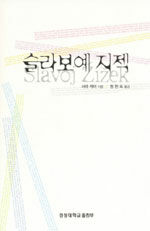
P.S. 사라 케이의 <슬라보예 지젝>(경성대출판부, 2006)의 마지막 장('정치학, 혹은 불가능의 예술')의 마지막 단락은 이렇게 마무리된다.

"2001년 9월 11일의 사건에 뒤이은 인터뷰 '참된 사랑의 한 가지 척도(The One Measure of True Love)'의 말미에 지젝은 다음과 같이 말하였다. '우리는 우리의 좌표에 관하여 다시 생각해야 할 도전에 직면해 있다. 부디 이 비극적 사건이 이렇게 좋은 결과를 낳기를 바란다. 부디 우리가 이 사건을 이용해 그저 같은 것을 더 많이 하는 것이 아니라 우리세계에서 무엇이 정말로 변하고 있는지 생각하게 되기를 바란다.'"(232쪽)

이 인터뷰가 본문의 내용이며, 케이가 인용한 마지막 문장들은 강조표시를 해놓았다. 케이가 이어서 덧붙이고 있는 내용은 이런 것이다: "그의 최근 저작들은 이 세계를 좀더 나은 곳으로 만들기 위한 일종의 상징적 활동(activity)이 아닐지 모른다. 그러나 그의 저작들이 우리로 하여금 실재(계)를 접하게 하고 우리의 전체 상황에 관하여 다시 생각하게끔 자극한다면 이것은 일종의 정치적 행위(act)인 셈이다."

이러한 저자의 평가에 공감한다. 그것은 이 마지막 장의 서두에서 "그러므로 지젝에게 정치적인 것은 모든 것을 망라하는 것이라고 말하는 것은 권력과 권력에 대한 그의 반응이 모든 것에 스며들어있다라고 말하는 셈이 된다. 결과적으로 정치적인 것을 그의 사고를 담고 있는 틀로 상상하는 것보다 그의 사고를 움직이게 하는 에너지로 보는 것이 오히려 더 명백해진다."(193쪽)란 지적에 공감하는 것과 연관돼 있다.

이러한 지적들을 고려하더라도 사라 케이의 입문서는 지젝에 관한 필독서로 부족함이 없지만, 욕망(desire)과 욕동(drive)을 수시로 뒤바꿔서 번역하는 국역본은 곳곳에서 유감스럽다. 가령, "그러므로 환상은 (상징계의) 욕동으로부터 (실재계의) 욕망을 분리키시고, 강요된 선택으로 인해 상실된 주이상스를 어떻게 타자들이 우리에게서 '훔쳐갔는가' 하는 내러티브를 상징계에 제공한다."(205쪽)라고 할 때, 상징계의 욕망과 실재계의 욕동은 서로 전치돼 있다. 지젝은 여전히 번역이라는 환상의 스크린 너머에 있는 것인가?..


댓글(0) 먼댓글(0) 좋아요(0)
좋아요
공유하기 북마크하기찜하기 thankstoThanksTo