-
-
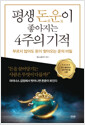
평생 돈운이 좋아지는 4주의 기적 - 부르지 않아도 돈이 찾아오는 운의 비밀
Baro 황수현 지음 / 라온북 / 2019년 6월
평점 :

품절

평생 돈운이 좋아 지는 4주의 기적] ....글쎄 평생 돈운이 좋아 진다면 어떤 사람이던 마다할 것이 없겠다... 저자의 애기로는 공식을 알면 수학 문제를 풀 수 있는 것처럼 부에도 공식이 존재 한다고 한다.
저마다 다르겠지만 부를 희망 하거나 가지거나 만들려고 노력 하지 않은 사람은 없을 듯 하다. 방법론의 차이과 시기 , 그리고 자본의 차이로 실패와 성공을 반복 하겠지만 말이다..
주제는 간단하다. 진정 내가 원하는 삶과 목표를 에둘러 설명 하거나 은유 하지 맣자라는 것이다. 멀지 않은 과거에도 그랬고 현제에도 돈이라는 단어 자체에도 거부감을 느끼는 사람들이 많다,, 이로 인해 고통을 받았거나 , 부모로 부터 받은 처럼한 사상 혹은 교귝에 의한 자의던 타의던 필요 불가금의 성격을 지닌 채로 돈 보기를 돌 보기? 하시는 분들도 있겠다..
하지만 마음 한구석엔 부자가 되고픈 열망이 갈등 한다. 여기엔 내재적 욕망과 도덕적 압박이 존재 한다. 저자는그러한 네거티브 적인 마인드를 제거 하여 플러스적인 에너지를 만들라고 조언 한다.
챕터는 4개장으로 구성 되어 잇고 돈에 대한 관점과 생각 , 돈을 있는 그대로 보지 못한 현실 ,, 나아가 돈에 대한 새로운 관계 맺기로 전환점을 마련 하고 ,,, 원하는 만큼 이룰 수 있는 꿈의 노트를 만들고 열심히 씨앗을 뿌리는 일 등이다.
결론적으로 보자면 , 생각만 하고 아무 행동이나 노력없이는 부자가 될 수없다 라는 것은 동서 고금의 진리이다 신 께 아무리 기도 하여 로또 당첨을 기원해 보지만 사지도 않은 로또를 당첨 시킬 재주는 신도 없는 듯 하다.
전반적으로 흐르는 주제어는 돈 이지만 금융 경제적 자유를 누리고자 하는 모든 이땅의 사람들은 한번쯤 지전 내가 돈에게 잘 대우 해 주고 받을 만큼 일하고 노력 하는지 한번 자문해 볼 필요가 있다.
인생의 황금률이 그러하지 않은가 내가 투입 하지도 않는 결과물을 너무 희망만으로는 이뤄지는 것은 없다.
다만 사물 인테넷이 활발한 지금 기계와도 대화? 가 가능한 고로 돈과도 한번 친밀도 있게 애기해 보는 것도 좋은 방편일 수도 있다 긍정의 에너지를 미치면 결국 그 좋은 에너지는 자신에게로 돌아 온다는 연구 결과도 있다.
이전에 어떤 일분 물 과학학자는 수정 그릇에 받아놓은 물에다가 좋은 말을 하고 자라나는 새싹 들에게 좋은 음악과 영상을 보여 주어 식물의 생장을 돕거나 , 물입자수가 육각으로 변모하는 현상을 실험 하기도 하였다.
이새상은 물리적으로 가능한 세상 이기도 하고 이론상으로 가능할 수도 실현 할 수도 잇는 것이 혼재 되어 있다. 돈 이라는 것이 재발로 걸어 들어고기도 하겠지만 늘 감사 함을 안고서 살아가는 어떤 사람에게는 자연 스레 복이 되어 돌아 오지 않을까요 .... 아무래도 밝고 좋은 에너지가 넘치는 쪽으로 만물은 흘러 간다고 생각 해보는 책력거 99 였습니다.
Value Up Tip ; 돈 / Money 역사
History
The use of barter-like methods may date back to at least 100,000 years ago, though there is no evidence of a society or economy that relied primarily on barter. Instead, non-monetary societies operated largely along the principles of gift economy and debt. When barter did in fact occur, it was usually between either complete strangers or potential enemies.
Many cultures around the world eventually developed the use of commodity money. The Mesopotamian shekel was a unit of weight, and relied on the mass of something like 160 grains of barley. The first usage of the term came from Mesopotamia circa 3000 BC. Societies in the Americas, Asia, Africa and Australia used shell money – often, the shells of the cowry (Cypraea moneta L. or C. annulus L.). According to Herodotus, the Lydians were the first people to introduce the use of gold and silver coins. It is thought by modern scholars that these first stamped coins were minted around 650–600 BC.

Song Dynasty
Jiaozi, the world's earliest paper money
The system of commodity money eventually evolved into a system of representative money. This occurred because gold and silver merchants or banks would issue receipts to their depositors – redeemable for the commodity money deposited. Eventually, these receipts became generally accepted as a means of payment and were used as money. Paper money or banknotes were first used in China during the Song dynasty. These banknotes, known as "jiaozi", evolved from promissory notes that had been used since the 7th century. However, they did not displace commodity money, and were used alongside coins. In the 13th century, paper money became known in Europe through the accounts of travelers, such as Marco Polo and William of Rubruck. Marco Polo's account of paper money during the Yuan dynasty is the subject of a chapter of his book, The Travels of Marco Polo, titled "How the Great Kaan Causeth the Bark of Trees, Made Into Something Like Paper, to Pass for Money All Over his Country." Banknotes were first issued in Europe by Stockholms Banco in 1661, and were again also used alongside coins. The gold standard, a monetary system where the medium of exchange are paper notes that are convertible into pre-set, fixed quantities of gold, replaced the use of gold coins as currency in the 17th–19th centuries in Europe. These gold standard notes were made legal tender, and redemption into gold coins was discouraged. By the beginning of the 20th century almost all countries had adopted the gold standard, backing their legal tender notes with fixed amounts of gold.
After World War II and the Bretton Woods Conference, most countries adopted fiat currencies that were fixed to the U.S. dollar. The U.S. dollar was in turn fixed to gold. In 1971 the U.S. government suspended the convertibility of the U.S. dollar to gold. After this many countries de-pegged their currencies from the U.S. dollar, and most of the world's currencies became unbacked by anything except the governments' fiat of legal tender and the ability to convert the money into goods via payment. According to proponents of modern money theory, fiat money is also backed by taxes. By imposing taxes, states create demand for the currency they issue.